Beautiful Native Plants


Blog HOME ***Our team of bloggers writes about all aspects of ecosystem gardening, from native plants to pollinators and wildlife.***
Showing posts with label native plant. Show all posts

Sunday, December 22, 2019

Giant Ironweed, a Tough, Eastern North American Wildflower

Many butterflies visited the new ironweed including this  
beautiful giant swallowtail (Papilio cresphontes).

Why do we love native wildflowers in our yards? 


It's the butterflies, the birds, and the bees. As Doug Tallamy says, the plants in our yards need to do more than just be pretty. They should support wildlife and become part of the local ecosystem. And the best way to do this is to have a wide variety of native plants. This is why I was pleased when a giant ironweed (Vernonia gigantea) volunteered in my yard this year. I didn't notice it until it bloomed in the fall.


Saturday, February 25, 2017

Viburnum Under Siege. Part Two

Editor’s note: this is part two of this series. Don’t miss part one of Viburnum Under Siege.

The accidentally introduced pest, viburnum leaf beetle (Pyrrhalta viburni) or VLB for short, can destroy a shrub in just a couple of years. Unfortunately it continues to spread through North America. So I am trying to learn more about it, hoping that we can protect the viburnums in our area. This is the information that I have gathered from the sites listed and from my own observations. It doesn’t look very encouraging.

VLB larvae and leaf damage
© Beatriz Moisset
The grubs or larvae emerge from eggs early in the spring. They are yellowish or greenish, with black markings and can reach one third or a quarter of an inch in length.
They spend a few weeks feeding on the leaves by making numerous little holes between the veins. These holes are easy to identify. By early or mid June they climb down along the stems and bury themselves in the ground to pupate. When I searched for them in mid June, I found none, only the damage remained.

Tuesday, February 21, 2017

Viburnum Under Siege

Leaf damage inflicted on arrowwood
by the viburnum leaf beetle
© Beatriz Moisset
 The shoots of Viburnum dentatum are thin, strong and straight. Native Americans used them for arrow shafts. That is why this shrub is often called arrowwood. Until recently it was considered as a plant free from serious pests. Now, the arrowwoods in my area are under attack by an invasive leaf beetle.

Last May (2010), I began noticing leaves full of holes (skeletonized); something that I have never seen before. I finally spotted the culprits, little bugs hiding on the underside of damaged leaves. They look somewhat like caterpillars, but not quite; they are greenish, with black dots. A visit to the Bugguide site helped me identify them and provided links to several university sites full of information (see below). They are the larvae of the viburnum leaf beetle (VLB for short, Pyrrhalta viburni), an introduced pest from The Old World. Both the larvae and adults of this beetle feed exclusively on a variety of species of viburnum.

Viburnum leaf beetle larva and leaf damage
© Beatriz Moisset

Monday, December 26, 2016

Why I love the Florida Native Plant Society


Florida Native Plant Society

Previously, I talked about our native plant resources in Florida including the Florida Native Plant Society (FNPS), this time I’ll provide more details on how much I like FNPS.

My local chapter (Ixia in Jacksonville) holds informative meetings with expert speakers on a wide range of topics relating to native plants or habitats, offers plants for sale or raffle at most meetings, runs field trips, and participates in outreach programs. Our chapter has developed an “Alter-Natives” brochure for northeastern Florida that lists native plants to replace those frequently sold (and sometimes invasive) plants. Here’s a link to a pdf file of the brochure. We’ve adopted a small park in Jacksonville called Native Park, but ironically it was filled with non-native plants–we have made this into a showcase for native plants in an urban setting. In short, our chapter is filled with smart, active and caring folks doing important work as a group and as individuals.  Here’s a link to find an FNPS chapter near you.

The Annual FNPS Conferences

While the chapter is great fun, the annual state-wide FNPS conference is my chapter on steroids!  I’ve been to two conferences now and I find that them to be even more stimulating and inspiring.  There are 37 chapters around the state: so there we are all together each of us talking about our projects and learning from speakers and local field trips.  I took some photos and will provide a short tour of the 2012 conference which took place on May 19th to 22nd near Orlando.

Native plant vendors display their plants for sale under the live oak tress.

Wednesday, September 28, 2016

Deer Running through the Pepperdine Lawn

Deer Running Through Wildlife Corridor in Topanga State Park,
Photo by VenturaCountyTrails.org

It is so dry that deer have appeared on the Pepperdine lawn.  Anyone who has spent any time in Malibu or has just driven up the Pacific Coast Highway has seen that huge expanse of green-covered hillside that is the front lawn of Pepperdine University.  I try not to think about how much water it takes to keep it green throughout the summer!  Now, it seems that the Santa Monica Mountains are so dry that deer are bringing their families down to the Pepperdine lawn to drink the freshly watered lawn, even in January!

Monday, July 18, 2016

Bountiful Buttonbush

Buttonbush, (Cephalanthus occidentalis), is a native shrub that gets high marks for its usefulness to wildlife. It’s also a personal favorite because, well, it’s just plain so amusing! And what could be better than a plant that’s useful and entertaining at the same time?

Buttonbush, Cephalanthus occidentalis
Just look at that crazy flower! How many different connections does it bring to your mind? Here are some of its other common names: Honeyballs, Spanish Pincushion, Globeflowers, Little Snowball – and that’s before we even get into sputnik space and beyond.

Surrounding the spherical flower heads is a delicate fringe of pistils protruding past white corollas. You will occasionally see variations in the flower color from pale yellow to a very light pink. They are not only showy and long-lasting but also quite pleasingly fragrant.

Saturday, June 25, 2016

Natives Plants for Your Yard: the Next Step


Grassleaf Barbara’s Buttons  (Marshallia graminifolia)
are beautiful Florida natives suitable for a fairy tale garden…

Is native gardening a fairy tale? 

Once upon a time, a gardener decided that she wanted more butterflies and more birds in her yard. She read books and oodles of online material and then she attended classes, conferences, workshops, and garden fests.

After all this education, she found that she really could make a big difference by installing native plants that attract butterflies and birds with their berries and delicious leaves that caterpillars would eat. As a bonus her landscape would be easy to care for since native plants have lived in the wild for eons with no care at all.

After a great quest* far and wide across her realm, she found a local native plant nursery that had the native plants she wanted. She paid the small bounty for the plants and brought them home and everyone (and every bird and butterfly) lived happily ever after.

NOT!!
“Things” are more complex than than a fairy tale.

Tuesday, March 1, 2016

What is native? What is not? When does it matter?

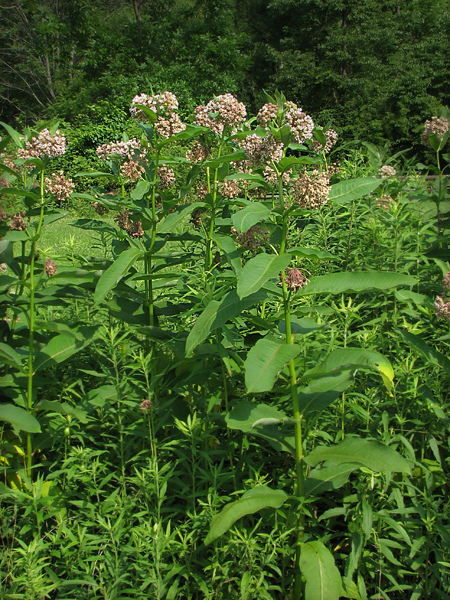
Common milkweed, Asclepias syriaca (© B. Moisset)

Definitions of native plants abound. None is entirely satisfactory in all circumstances but each may serve a specific function. Some strive for scientific accuracy; others serve practical purposes. Moreover, in some instances the nativity of a plant may not matter to the native-plant gardener. None of us is about to give up growing tomatoes regardless of their non-native status.
 
The FederalNative Plant Conservation Committee proposes the following definition: “A native plant species is one that occurs naturally in a particular habitat, ecosystem, or region of the United States and its Territories or Possessions, without direct or indirect human actions.” Such definition may be useful for policy making.

Saturday, February 20, 2016

Snow squarestem: A bee and butterfly magnet

A great purple hairstreak butterfly
sipping nectar from a snow squarestem.
Snow squarestem or salt and pepper (Melanthera nivea), a member of the daisy family (Asteraceae), attracts a high volume of butterflies, skippers, bees, wasps and even hummingbirds.

It has only white disk florets in its flower head–unlike a sunflower, it has no ray florets that look like petals. Its common name comes from the white flowers and its square stems with a mostly opposite leaf arrangement. Many members of the mint family (Lamiaceae) also have square stems and opposite leaves, so when I first heard the common name I assumed that this was in the mint family, but the plants are classified by their flowers’ characteristics, not by their stems or leaves.  (See A Plant by Any Common Name…)

Friday, February 19, 2016

Native Hibiscus? You Bet!

A showy native hibiscus with great wildlife benefit


Hibiscus moscheutos, swamp mallow,


People who say ‘natives aren’t showy’ have never seen our native hibiscus! Hibiscus moscheutos has a wide distribution in the continental U.S.; from New York down to Florida, and west as far as Utah. Like any plant that grows in so many places, it comes with a slew of common names: swamp mallow, rose mallow, rose-eyed and crimson-eyed swamp or rose mallow, hibiscus mallow, and even marshmallow hibiscus. More about that last one later! But by any name, this plant’s a winner!