Beautiful Native Plants


Blog HOME ***Our team of bloggers writes about all aspects of ecosystem gardening, from native plants to pollinators and wildlife.***
Showing posts with label habitat. Show all posts

Wednesday, February 15, 2017

Pollinators and the Garden in Winter

Man-made bee houses
Good replacement for holes in old logs
©Beatriz Moisset
Do you ask yourself: where do pollinators go in winter? We see them through the warm seasons visiting flowers and doing their invaluable job. But, then what happens to them? Putting aside the few, such as hummingbirds and monarch butterflies, which fly to better climates, all the others find a secluded place to spend the cold months. Like hibernating bears, many fatten themselves by stocking up on supplies and then go to sleep. Others rest as eggs or in an immature state such as a larva or pupa. Either way, they need a sheltered space safe from predators, parasites and excessive cold.

I know that some gardeners, with the best of intentions, destroy these vital shelters. It may be a good idea to take a look at all the places used by pollinators during the winter. This is one case in which a little untidiness may be a good thing.

Monday, November 14, 2016

It is Cold Outside. Where did all the Butterflies Go?

Great spangled fritillary (Speyeria cybele)
Its tiny caterpillars will survive the winter
© Beatriz Moisset
Winter has arrived. What happened to all the six legged creatures we saw in summer? Where did the crawling, scuttling, flitting, buzzing multitudes go? Those of us who live in temperate and colder climates notice the disappearance of practically all insects when the weather gets cold. We are talking about the ones that live outdoors, not about those aggravating creatures that have found their ways into our houses and turned them into their homes.

Monday, July 18, 2016

Bountiful Buttonbush

Buttonbush, (Cephalanthus occidentalis), is a native shrub that gets high marks for its usefulness to wildlife. It’s also a personal favorite because, well, it’s just plain so amusing! And what could be better than a plant that’s useful and entertaining at the same time?

Buttonbush, Cephalanthus occidentalis
Just look at that crazy flower! How many different connections does it bring to your mind? Here are some of its other common names: Honeyballs, Spanish Pincushion, Globeflowers, Little Snowball – and that’s before we even get into sputnik space and beyond.

Surrounding the spherical flower heads is a delicate fringe of pistils protruding past white corollas. You will occasionally see variations in the flower color from pale yellow to a very light pink. They are not only showy and long-lasting but also quite pleasingly fragrant.

Monday, June 27, 2016

Florida’s roadside meadow program

A Florida roadside meadow on 5/1/14 really “pops” and the adjacent farm is planted with wildflowers, too.
I took the long way home from a meeting with my editor at University Press of Florida in Gainesville and Marjorie Shropshire, my illustrator, last year. Marjorie and I stopped to photograph this amazing meadow in Putnam County. (Located in the south central section of district 2 as shown in the map below.)

Tuesday, March 1, 2016

What is native? What is not? When does it matter?

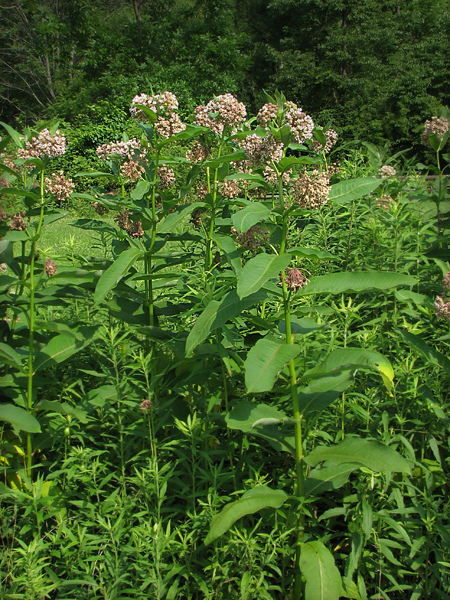
Common milkweed, Asclepias syriaca (© B. Moisset)

Definitions of native plants abound. None is entirely satisfactory in all circumstances but each may serve a specific function. Some strive for scientific accuracy; others serve practical purposes. Moreover, in some instances the nativity of a plant may not matter to the native-plant gardener. None of us is about to give up growing tomatoes regardless of their non-native status.
 
The FederalNative Plant Conservation Committee proposes the following definition: “A native plant species is one that occurs naturally in a particular habitat, ecosystem, or region of the United States and its Territories or Possessions, without direct or indirect human actions.” Such definition may be useful for policy making.