![]() |
A daffodil’s visitor
This bee is not likely to find any
nourishment
© Beatriz Moisset
|
Beautiful Native Plants
Blog HOME ***Our team of bloggers writes about all aspects of ecosystem gardening, from native plants to pollinators and wildlife.***
Saturday, July 16, 2016
Pollinators and Native vs. Non-native Plants
Wednesday, July 6, 2016
Bring Back the Native Pollinators! Honey bees are not enough
![]() |
A long-horned
bee on sunflower
© Beatriz Moisset |
Friday, July 1, 2016
From lawn to woods: a retrospective
![]() |
| Spring 2014: a pinxter azalea in the front meadow. |
Then and now…
I posted the above photo of my pinxter azalea (Rhododendron canescens) a while back with the comment that with the exception of the trees next to the pond (behind the top sprout on the right), this area used to be lawn. People were really surprised and asked for more details and more information about how it was transformed, so I thought I’d share the history here. (Update: I also used this photo on the cover of my book, The Art of Maintaining a Florida Native Landscape.)
Thursday, June 30, 2016
The magic of the mistletoes
![]() |
| A mistletoe is green all year, even when the host tree is dormant. This one was living on a red maple (Acer rubrum). |
Mistletoe played an important role during ancient times in the Old World when people brought evergreens inside so the gods of spring would have safe haven for the winter; and they celebrated the beginning of the return of the sun with various festivals. The European mistletoe (Viscum album) played and important role in these pagan rituals.
You can understand how the ancients must have been mystified by mistletoe. It stays green while the host tree apparently dies over the winter. It never touches the ground, so it must be purer somehow. Some thought that it must be a plant graft from the gods. See my article, Myths of mistletoe to learn about some of these legends.
It is the synthesis of various legends that led to the tradition of kissing under the mistletoe for good luck, fertility, and/or long marriage. While mistletoe has been used for medicinal purposes over the centuries, both the leaves and berries are toxic to both humans and pets. Unlike poinsettia, that New World Christmas plant, which despite its reputation, is not poisonous. See my article, Poinsettias are NOT poisonous.
Wednesday, June 29, 2016
Plan ahead!
![]() |
| Plants don’t a have a choice–they must do the best they can where they are. |
Sometimes Mother Nature doesn’t leave enough growing space for her trees and shrubs. Once the plants start growing out in the wild they have to do the best they can with the space they have.
The trio of trees in this top photo, a cherry (Prunus serotina) and two longleaf pines (Pinus palustris) have a problem. The cherry’s major surface roots have a stranglehold around both of the pines and eventually the pines will become weakened at their bases as they try to expand and the cherry tree’s roots expand as well. Right now the cherry tree trunk is about a foot in diameter, but it and the pines will continue to grow. The pines will become a hazard in this suburban yard and are likely to blow over in a tropical storm. It’s possible that all three of them will come down together during a wind event. (Update: several years later, the cherry died.)
Monday, June 27, 2016
Florida’s roadside meadow program
![]() |
| A Florida roadside meadow on 5/1/14 really “pops” and the adjacent farm is planted with wildflowers, too. |
Sunday, June 26, 2016
Beauty is in the eye of the beholder
![]() |
| Can you spot the rayless sunflowers in this bed? There are about 20 flower heads blooming. |
As I discussed in Adventures in Creating a Native Garden back in June 2013, I’d planted some rayless sunflowers (Helianthus radula) as part of the native garden. Now that they are blooming, I have to say that I’m a bit underwhelmed. Their beauty is too subtle to enjoy from afar and they do not stand out in this bed.
Saturday, June 25, 2016
Adventures in Creating a Native Garden
Stage one: Lawn removal & three bunching grasses
![]() |
| Three Elliot’s love grass bunches glow in the early morning sun. |
Supporting wildlife beyond your garden gate
![]() |
| Go beyond your garden gate |
A look back for lessons for the future
Wednesday, May 18, 2016
Tuesday, March 1, 2016
What is native? What is not? When does it matter?
![]() |
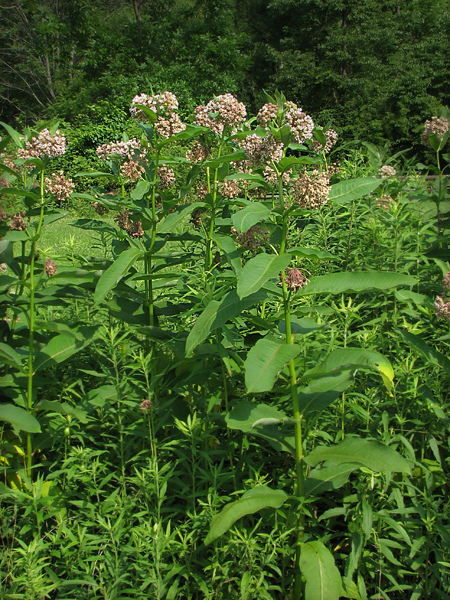
| Common milkweed, Asclepias syriaca (© B. Moisset) |
Definitions of native plants abound. None is entirely satisfactory in all circumstances but each may serve a specific function. Some strive for scientific accuracy; others serve practical purposes. Moreover, in some instances the nativity of a plant may not matter to the native-plant gardener. None of us is about to give up growing tomatoes regardless of their non-native status.
The FederalNative Plant Conservation Committee proposes the following definition: “A native plant species is one that occurs naturally in a particular habitat, ecosystem, or region of the United States and its Territories or Possessions, without direct or indirect human actions.” Such definition may be useful for policy making.