Beautiful Native Plants


Blog HOME ***Our team of bloggers writes about all aspects of ecosystem gardening, from native plants to pollinators and wildlife.***
Showing posts with label wildlife. Show all posts

Thursday, February 20, 2020

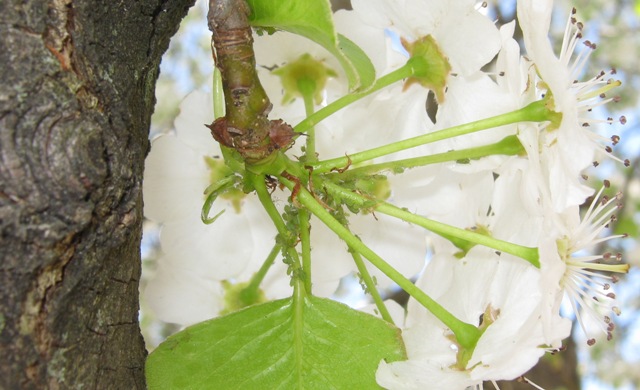
Insects are a Weighty Matter

Aphids on a pear tree
One of many out-of-sight colonies,
amounting to several pounds of insects per tree
© Beatriz Moisset
If all the insects in an acre of land chose to sit on you, they would crush you. Is that possible? How many insects are there in an acre and how much do they weigh?

To get a better perspective on the importance of insects, I set myself the task of finding out how many insects there are in any ordinary garden or field. An entomologist/gardener, Frank E. Lutz did just that more than 70 years ago.

Wednesday, January 24, 2018

Flower Hill Farm Butterflies of 2017

I am chasing away the winter blues by sorting through photographs of my butterflies captured in 2017. I hope you might enjoy the bright colors and beautiful patterns over at my Garden Blog.


                                          All Best Wishes and Happy Butterflying for 2018!

Monday, March 13, 2017

Bumble Bees: Panda Bears of the Insect World


The impatient bumble bee (Bombus impatiens)
the most common bumble bee in the Eastern US
© Beatriz Moisset

Most people hate or fear insects with just a few exceptions. Bumble bees have enough charisma to be loved, at least by children. You find children’s books, toys, and Halloween costumes about bumble bees. Perhaps what makes them acceptable is their fuzzy roundish appearance reminiscent of a tiny bear. This positive image is reinforced by their cheerful buzzing sound and their penchant to visit flowers. This is one insect whichpeople find easy to accept in a wildlife garden.

Wednesday, September 28, 2016

Deer Running through the Pepperdine Lawn

Deer Running Through Wildlife Corridor in Topanga State Park,
Photo by VenturaCountyTrails.org

It is so dry that deer have appeared on the Pepperdine lawn.  Anyone who has spent any time in Malibu or has just driven up the Pacific Coast Highway has seen that huge expanse of green-covered hillside that is the front lawn of Pepperdine University.  I try not to think about how much water it takes to keep it green throughout the summer!  Now, it seems that the Santa Monica Mountains are so dry that deer are bringing their families down to the Pepperdine lawn to drink the freshly watered lawn, even in January!

Monday, July 18, 2016

Bountiful Buttonbush

Buttonbush, (Cephalanthus occidentalis), is a native shrub that gets high marks for its usefulness to wildlife. It’s also a personal favorite because, well, it’s just plain so amusing! And what could be better than a plant that’s useful and entertaining at the same time?

Buttonbush, Cephalanthus occidentalis
Just look at that crazy flower! How many different connections does it bring to your mind? Here are some of its other common names: Honeyballs, Spanish Pincushion, Globeflowers, Little Snowball – and that’s before we even get into sputnik space and beyond.

Surrounding the spherical flower heads is a delicate fringe of pistils protruding past white corollas. You will occasionally see variations in the flower color from pale yellow to a very light pink. They are not only showy and long-lasting but also quite pleasingly fragrant.

Saturday, June 25, 2016

Adventures in Creating a Native Garden

Stage one: Lawn removal & three bunching grasses

Three Elliot’s love grass bunches glow in the early morning sun.
Last September I began this set of garden adventures with the purchase of some Elliot’s love grass (Eragrostis elliottii) at a native plant sale. I knew I was going to reduce the tongue of lawn out into the front meadow and wanted to have the grasses to set the area off.

A well-managed edge hides or distracts from a weedy interior.

Supporting wildlife beyond your garden gate

Go beyond your garden gate

On this blog most of us focus on our own properties with ideas and success stories of how our mostly native landscapes have attracted wildlife. But anyone who is concerned about the environment can also become an advocate for Mother Nature. It's a pleasant experience to write for people like myself who also believe that creating more wildlife-friendly habitat is a good idea, but isn't one of our goals reaching out to wider audiences who might not have thought that their landscaping decisions are important?

Monday, February 22, 2016

Managing a natural pond

Water spangles (Salvinia minima), an invasive floating fern.

Trouble in paradise

Previously, I wrote about how much we have enjoyed our front pond in The joys of a Florida pond, but in 2011 the whole surface of the pond had become totally covered by a noxious invasive with a cute name—water spangles (Salvinia minima). It had probably come in as a hitchhiker on one of our beloved birds or traveling turtles, and from there, it went wild.

My husband and I scooped out cartloads of it by dragging a 8′ piece of plastic mesh between us as we walked across the pond and we scooped up more with hard plastic leaf rakes. I used it in the compost pile and as a mulch, but each time we cleared out a batch, new, bright-green plants filled in the spaces in a matter of days no matter how large a gap we created.

The joys of a Florida pond


Our pond in the summer of 2010. This photo is looking toward the little dock on
our neighbor’s end of the pond.

We share a natural pond with our next-door neighbors and have added a border of native plants at its edge to replace the turfgrass that used to dip right into the pond. I’ve planted ferns, black-eyed Susans, scarlet hibiscus and more. Plus other natives have also moved in.

Saturday, February 20, 2016

Attracting Damsels and Dragons

Common green darners (Anax junius)
mating and laying eggs under the water’s surface.
Many people have long been interested in birding and butterfly gardening, but with the availability of new dragonfly & damselfly field guides, more folks are now identifying and pursuing these interesting insects. And with their beautiful coloration and fun names like variable dancer, common green darner, eastern pondhawk, little blue drogonlet, how can anyone resist?  Plus they eat mosquitoes!

Even the Audubon Society has been spending more time covering dragonflies and damselflies online and in its magazine.

This is from their July/August issue:
"Once you start watching dragonflies, you can’t help but notice how amazing they are. They fly at speeds of up to 30 miles per hour, zip forward and backward, pivot in a flash, and hover with ease."

Cheer for the Predators in Ecosystem Gardening


A female Florida cooter laid a clutch of eggs
next to the rain garden. Her head is tucked in
because I’ve invaded her privacy and she can’t leave.
So this happened the other day between the natural pond out in our front yard and the front porch:

A female cooter turtle (Florida cooter (Pseudemys floridana)) laid some eggs at the edge of a mulched path near a rain garden. After I took several photos, I went inside to download the photos. Not five minutes later I saw two fish crows, each carrying an egg, flying from the direction of her cache. I stealthily crept out the front door with my camera on to see if I could capture some of the mayhem.

Friday, February 19, 2016

One Native Plant = Three Habitat Benefits

Coral honeysuckle create a beautiful display
throughout the summer months.
While this (1 = 3 (or more)) equation is not rare in the native plant world, few accomplish this more beautifully than coral honeysuckle (Lonicera sempervirens).

This vine is native to the eastern US from Maine and Michigan south to central Florida and Texas. Since I‘m in Florida, here’s the profile & range for the state. Even though it’s not native in south Florida, many people successfully grow it there as well.

When I looked up the native range, I was surprised at the size. I’ve done a lot of hiking over the decades up and down the east coast, particularly in the mid-Atlantic and New England regions, including two years of intense field work during the mid-seventies on the Delmarva Peninsula in likely habitats when I was working on my masters degree in botany. Yet, I’d never seen this plant growing in the wild until last year in Texas--it was in a state park, and now that I think about it, it might have been planted there along the bulkhead near the boat ramp.

Maypop, a native butterfly and bee magnet

Passionvine has a wonderfully complex flower.

Passionvine, purple passion flower, maypop (Passiflora incarnata) is a beautiful perennial native vine with a wonderfully complex flower with crimped petal-like tepals. It dies back to the ground in the winter, but pops up in more places the next spring–in May usually.

It’s widely distributed from Florida to Texas and northward to Pennsylvania. It can be propagated by cuttings, seed, or by digging up its sprouts when they’ve come up in an inconvenient place.

A Requiem for a Hickory Tree

Tree trimmers were hired to remove a healthy hickory tree.
I've gone through more than 20 loads of chips on our property over the years. A couple of years ago, my old wood chip pile had been in place for more than a year and what was left of it was mostly compost. So I was in need of some new chips.

I followed a caravan of tree trimmer trucks including a chipper down my road. I asked the tree guys what they would be cutting down, thinking it would be some dead or dying trees, but no. They were going to remove a perfectly healthy hickory tree, because according to them, my neighbors thought it was dropping too many nuts on the lawn. Maybe there was another reason like its being too close to the bulkhead next to the lake, but whatever the reason, the tree guys would deliver the load of chips around lunchtime.

Wednesday, February 17, 2016

Doug Tallamy!

Doug Tallamy, Native Plant Hero!
The hero of native plant enthusiasts everywhere, Doug Tallamy has made the case for using native plants in every landscape, no matter how small, in his iconic 2007 book Bringing Nature Home. He says that planting natives in small landscapes will not recreate ancient ecosystems, but it does create biodiversity to support what’s left of our wildlife.

Doug Tallamy was a keynote speaker at the 2012 Florida Native Plant Society’s annual conference in May. He packed the hall and received a standing ovation at the end of his presentation. I think the ovation was well deserved, not only because of his great presentation, but also because of his commitment to the cause. He has provided us (native plant enthusiasts) with easy-to-understand talking points on why using natives in the landscapes is important.

Tuesday, February 16, 2016

An Exception to the Rules

The exceptional and beautiful polka-dotted wasp moth (Syntomeida epilais) breaks a number of Mother Nature’s rules:

Palkadotted wasp moth  (Syntomeida epilais) 
on Spanish needles (Bidens alba).

#1. Adult moths fly at night. Fortunately for photographers, this beautiful moth flies in the daylight hours.

#2. Adult moths have pale or pastel colorations. With their iridescent gunmetal blue coloring punctuated by white dots and a bright red tip on their abdomens, these insects mimic wasps and display the warning coloration that tells birds that they are dangerous. As larvae (caterpillars) they consume poisonous foliage, so this is not an entirely false warning.

Of Timberdoodles and Ecotones

The timberdoodles are back!

American Woodcock aka the timberdoodle.
Photo by guizmo_68 on Wikipedia


We’ve probably had them wintering on our property for years, but first noticed them only last year. Their plumage, a mix of different shades of browns, grays, and black, blends in with the winter vegetation and they stay hidden during the day unless you flush them out of hiding. Last year, we saw a group of squirrels flush one out of hiding.