Beautiful Native Plants


Blog HOME ***Our team of bloggers writes about all aspects of ecosystem gardening, from native plants to pollinators and wildlife.***
Showing posts with label biodiversity. Show all posts

Thursday, February 20, 2020

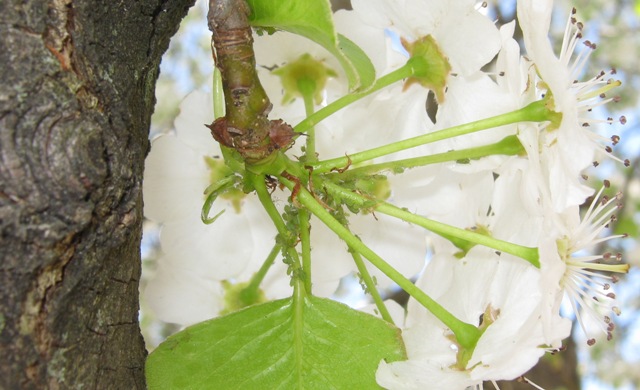
Insects are a Weighty Matter

Aphids on a pear tree
One of many out-of-sight colonies,
amounting to several pounds of insects per tree
© Beatriz Moisset
If all the insects in an acre of land chose to sit on you, they would crush you. Is that possible? How many insects are there in an acre and how much do they weigh?

To get a better perspective on the importance of insects, I set myself the task of finding out how many insects there are in any ordinary garden or field. An entomologist/gardener, Frank E. Lutz did just that more than 70 years ago.

Wednesday, January 29, 2020

Feed the Birds!


While there are many discussions on the pros and cons of using bird feeders, you can never go wrong by feeding them with the native plants they depend on in the wild. As we wrestle with the reality of increasing species loss, we can take action in our own yards and community spaces by promoting and using plants native to our region. Yes, changes are occurring, and the ranges of both flora and fauna are moving ever northward. But less is not more - let’s keep as many of the local eco-type plants as we can for as long as we can. And enjoy the benefits of the company of the animals that are still counting on them. 


Taken from a distance, but you can see the juniper cone right in the robin's mouth

Friday, August 19, 2016

Pollinator-Friendly Lawns

Lawn and more lawn. © Catherine Zimmerman
Ordinarily a lawn is a desert, unwelcoming to wildlife from tiny insects to birds. The total surface of lawns in the United States has been estimated with the help of satellite technology as somewhere between 40,000 and 75,000 square miles, somewhere between the size of New York State and that of Texas. Some gardeners have started replacing large sections of grass ground cover with garden plants or meadow grasses in an effort to create beneficial habitat for wildlife. Many articles in “Native Plants and Wildlife Gardens” discuss the advantages of reducing the size of lawns and provide abundant suggestions on how to do it (see references below).

Wednesday, July 6, 2016

Bring Back the Native Pollinators! Honey bees are not enough

A long-horned bee on sunflower
© Beatriz Moisset
I keep pondering the questions I posed in my previous post (Will We all Die if Honey Bees Disappear?): how did we manage to become so dependent on a single species of pollinators, the domestic honey bee? What happened to the native ones that populated the entire continent and performed the pollination of the native plants? In my search for answers I stumbled upon an old publication of the Department ofAgriculture and finally began to find some answers.
Here is an excerpt from the USDA document prepared by the Division of Bee Culture in 1942: “The Dependence of Agriculture on the Beekeeping Industry—a Review.”

Sunday, July 3, 2016

Will We all Die if Honey Bees Disappear?

Bumble bees have been pollinating sunflowers, an important crop for Native Americans,
long before the arrival of the honey bee
© Beatriz Moisset
One third of our food needs to be pollinated by insects. Honey bees are responsible for most of it. With 4,000 species of bees in North America plus numerous other pollinators of different stripes, how did we manage to become so dependent on just a single species? We know how important it is to diversify our portfolio, our diet, and our crops and gardens. So, what were we thinking?

Saturday, June 25, 2016

Natives Plants for Your Yard: the Next Step


Grassleaf Barbara’s Buttons  (Marshallia graminifolia)
are beautiful Florida natives suitable for a fairy tale garden…

Is native gardening a fairy tale? 

Once upon a time, a gardener decided that she wanted more butterflies and more birds in her yard. She read books and oodles of online material and then she attended classes, conferences, workshops, and garden fests.

After all this education, she found that she really could make a big difference by installing native plants that attract butterflies and birds with their berries and delicious leaves that caterpillars would eat. As a bonus her landscape would be easy to care for since native plants have lived in the wild for eons with no care at all.

After a great quest* far and wide across her realm, she found a local native plant nursery that had the native plants she wanted. She paid the small bounty for the plants and brought them home and everyone (and every bird and butterfly) lived happily ever after.

NOT!!
“Things” are more complex than than a fairy tale.

Wednesday, May 18, 2016

The Science Behind our Commitment to Native Plants

Luna moth (© B. Moisset)
Don’t you get tired when you hear words like: “nativistic mania”, “simplistic assumptions”, “nostalgic”, and “sentimental notions”? Not to mention the stronger ones: “native-plant fundamentalist”, “xenophobia”, “native plant Nazi”?

Wednesday, March 23, 2016

A Healthy Garden is a Buggy Garden

Collage with several species of lady beetles
© 2006 Beatriz Moisset
We are all familiar with bad insects, the ones that cause damage in our gardens. However, most insects are beneficial or harmless. We are so concerned with the bad ones that tend to ignore the beneficial ones. Worse yet, sometimes we paint all insects with the same brush and want to kill them all. I had the opportunity to learn about good bugs when reading an old book published in 1941. It is rather surprising that somebody already knew so much about beneficial insects that long ago.

Frank E. Lutz, an entomologist and gardener, wrote “A Lot of Insects” in which he tells us about all the six-legged fauna of his large suburban yard. He noticed that native plants were good at attracting what he called guests and residents of this realm. His property was located near the center of a small town not far from New York City. In the course of a few years, Dr. Lutz collected and identified every kind of insect that he found in his property, a grand total of 1,402 different species. Before you shrink in horror at that staggering number of buggy creatures, let me tell you that Dr. Lutz was a fine gardener and, while he was sorting out and studying the little creatures in his garden, he was winning numerous gardening awards. And he had the insects to thank for such a healthy garden.

The fact is that many, probably most, insects are invaluable components of the ecosystem. It is wise to learn to recognize and appreciate these gardener friends. A good dose of curiosity may allow you to enjoy their intriguing, sometimes perplexing, comings and goings if you manage to overcome your bias against insects.

Monday, February 22, 2016

Ladybugs, Lady Beetles or Ladybird Beetles. How Good are They?

Polished lady beetle. © Beatriz Moisset. 2012
 What is in a name? Most call it a ladybug; others, ladybird or ladybird beetle or just lady beetle. Is one name more appropriate than others? Is there just one kind, or many kinds of this insect? Scientists prefer the term Coccinellidae to include all the members of this large family of beetles. The technical name has the advantage of leaving no room for confusion.
Seven-spotted Lady Beetle (Coccinella septempunctata). © Beatriz Moisset. 2013
 Ladybug is not entirely correct because “bugs” are insects with sucking mouth parts and simple development. “Ladybugs” are, in fact, beetles, with chewing mouth parts and with a full metamorphosis, with larva, pupa and adult, similar to that of butterflies. So the preferred common name is lady beetle.