Beautiful Native Plants


Blog HOME ***Our team of bloggers writes about all aspects of ecosystem gardening, from native plants to pollinators and wildlife.***
Showing posts with label Ecosystem. Show all posts

Thursday, June 30, 2016

Mother Nature’s Mysteries

No matter how much we study ecosystems and think we know the answers for which plants will grow where and under which circumstances, there are many instances when there is no obvious answer—they are Mother Nature's mysteries.

Most of The Ravines Conservation Area looks like this: dry soil with longleaf pines, oaks, and low ground cover. It’s managed with regular, prescribed burns.

Sunday, June 26, 2016

6 easy ways to save time & money in your landscape

As we approach each new year, many people will make resolutions that will probably not be kept for long, but changing to a more sustainable landscape regimen is one resolution that is easy to keep. While you are saving time and money, you’ll also be supporting a variety of wildlife.

Having more birds and butterflies in your yard is priceless!

Here’s a short list of money-saving landscaping resolutions: 

Let the predators in your landscape do the heavy lifting.
A potter wasp found a caterpillar to take back to its nest.
In ecosystem gardening, you cheer for the predators
and would never poison them.

1) Stop the landscape-wide poisons

You can save a lot of money and time when you stop trying to poison pests in your yard. After an adjustment period, the natural predators will get to work on those pests. As a bonus when you stop all landscape-wide pesticides, you’ll be creating a wildlife-friendly landscape that will be filled with butterflies and birds. (See #2 for poison-free lawns.)

See my post, A poison is a poison is a poison, for more details on the poison cycle and how to jump off.

Saturday, June 25, 2016

A poison is a poison is a poison

A working ecosystem means that 
you encourage Mother Nature's predators. 
Here, a garden spider captures
 a polka-dotted wasp moth.

The Poison Cycle

In a balanced ecosystem, predators will be in the minority. In other words, in a natural environment, there are many more prey organisms to ensure a continuous food supply for the predators. In such an ecosystem, there are huge numbers of prey including, aphids, white flies, cabbage worms, leaf miners, mole crickets, spider mites, and others that may be eating your crops, lawns, and landscape plants, but relatively few predator bugs such as praying mantids, assassin bugs and relatively few bug predators such as lizards, toads, birds, and bats.

Let's consider what happens when you attempt to poison pests. A general insecticide (organic or not) will kill the majority of bugs in an area, but more than 90 percent of them were beneficial or benign. Predators such as bats, frogs, lizards, and birds will go elsewhere to feed and even the microbes in your soil may die.

Wednesday, March 23, 2016

A Healthy Garden is a Buggy Garden

Collage with several species of lady beetles
© 2006 Beatriz Moisset
We are all familiar with bad insects, the ones that cause damage in our gardens. However, most insects are beneficial or harmless. We are so concerned with the bad ones that tend to ignore the beneficial ones. Worse yet, sometimes we paint all insects with the same brush and want to kill them all. I had the opportunity to learn about good bugs when reading an old book published in 1941. It is rather surprising that somebody already knew so much about beneficial insects that long ago.

Frank E. Lutz, an entomologist and gardener, wrote “A Lot of Insects” in which he tells us about all the six-legged fauna of his large suburban yard. He noticed that native plants were good at attracting what he called guests and residents of this realm. His property was located near the center of a small town not far from New York City. In the course of a few years, Dr. Lutz collected and identified every kind of insect that he found in his property, a grand total of 1,402 different species. Before you shrink in horror at that staggering number of buggy creatures, let me tell you that Dr. Lutz was a fine gardener and, while he was sorting out and studying the little creatures in his garden, he was winning numerous gardening awards. And he had the insects to thank for such a healthy garden.

The fact is that many, probably most, insects are invaluable components of the ecosystem. It is wise to learn to recognize and appreciate these gardener friends. A good dose of curiosity may allow you to enjoy their intriguing, sometimes perplexing, comings and goings if you manage to overcome your bias against insects.

Tuesday, March 1, 2016

What is native? What is not? When does it matter?

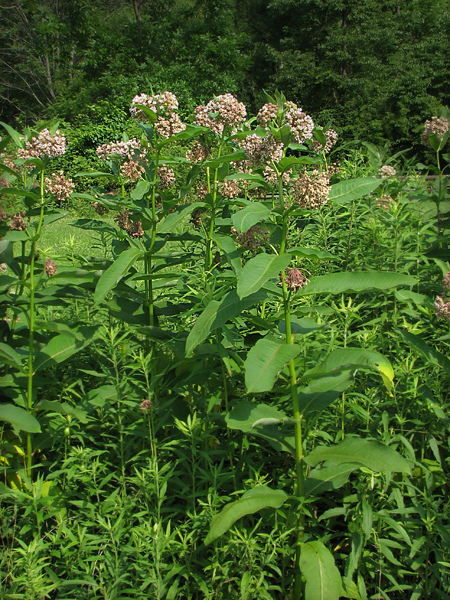
Common milkweed, Asclepias syriaca (© B. Moisset)

Definitions of native plants abound. None is entirely satisfactory in all circumstances but each may serve a specific function. Some strive for scientific accuracy; others serve practical purposes. Moreover, in some instances the nativity of a plant may not matter to the native-plant gardener. None of us is about to give up growing tomatoes regardless of their non-native status.
 
The FederalNative Plant Conservation Committee proposes the following definition: “A native plant species is one that occurs naturally in a particular habitat, ecosystem, or region of the United States and its Territories or Possessions, without direct or indirect human actions.” Such definition may be useful for policy making.